The Evidence Nest
Sensory First Aid · $24.99
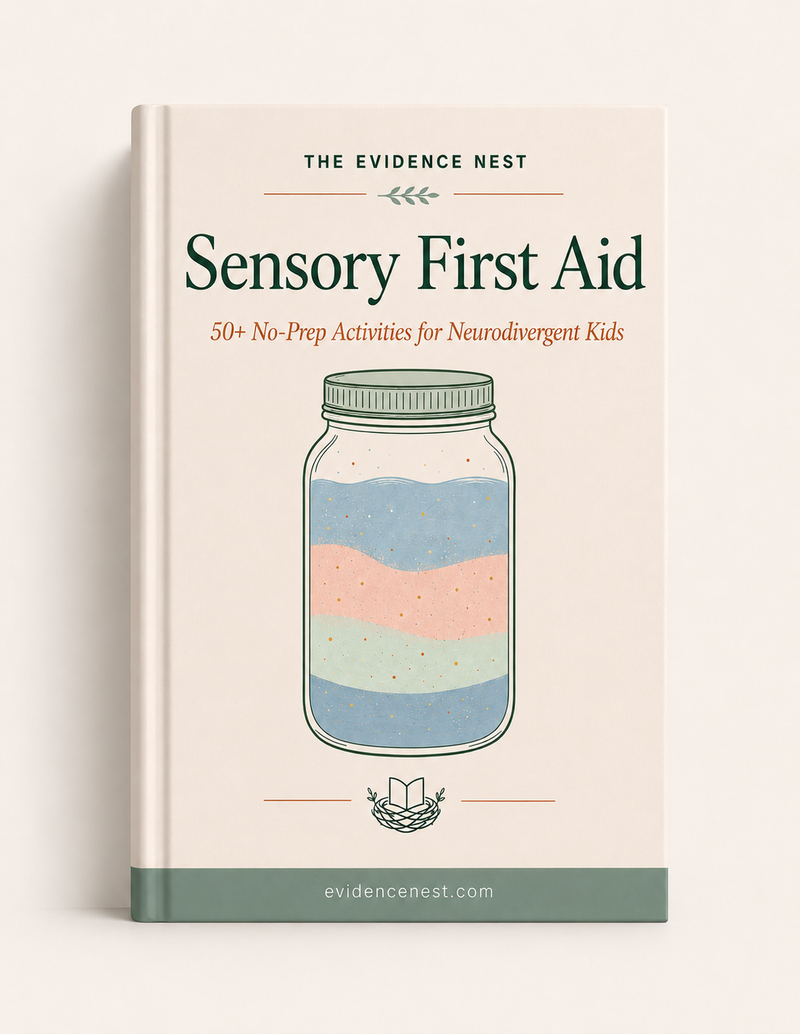
SENSORY · 2–10 Years
Sensory First Aid
50+ no-prep activities for neurodivergent kids.
$24.99
What this guide solves
My child melts down and I never see it coming until it's too late.
We walk you through the early warning signs of sensory overload and give you a simple observation framework so you can spot the build-up before it tips, and respond in a way that actually helps.
I don't know whether my child is seeking sensory input or avoiding it.
The guide explains both profiles clearly and shows you how to read your child's behaviour as information. Once you understand what their nervous system is asking for, choosing the right activity becomes straightforward.
Everything I try either doesn't work or only works once.
Sensory needs are dynamic and change day to day. We give you a library of 50+ activities organised by sensory need, time available, and room, so you always have something appropriate to try rather than relying on one approach.
I feel like I'm failing every time my child has a hard moment.
The guide reframes what you are seeing. Your child's behaviour is information about their nervous system, not a reflection of your parenting. Understanding that changes everything about how you respond.
We are on a waiting list for occupational therapy and I don't know what to do in the meantime.
This guide was written precisely for that gap. All of the activities are safe, evidence-informed, and use things you already have at home. They are not a replacement for therapy, but they are a meaningful support while you wait.
Bedtime and transitions are a daily battle in our house.
We have dedicated sections for both, with specific activity sequences for wind-down routines and transition support that reduce the sensory and cognitive load of moving from one part of the day to the next.
Inside the guide
Safety and Scope
p. 4
A Note for Parents
p. 5
What Sensory Regulation Actually Means
p. 6
Why Sensory Differences Show Up in ADHD and Autism
p. 8
Sensory Safety Rules for Home
p. 10
Choosing the Right Activity in the Moment
p. 11
The 50+ Activity Library
p. 13
Activity Finder by Sensory Need
p. 40
Activity Finder by Time Available
p. 41
Activity Finder by Room
p. 42
Building a Zero-Cost Home Sensory Kit
p. 43
Parent Scripts for Sensory Moments
p. 44
What Not to Do During Sensory Overload
p. 46
Meltdowns, Shutdowns, and Tantrums
p. 47
Building a Flexible Sensory Routine
p. 49
The 7-Day Sensory Observation Plan
p. 51
When to Seek Professional Help
p. 52
What Research and Clinical Practice Suggest
p. 54
A Final Word
p. 56
Printable Tools
p. 57
References
p. 65
Common questions
Yes. Many children have sensory sensitivities without a formal diagnosis. The activities in this guide are designed for any child who struggles with sensory input, whether or not they have a label.
No. All 50+ activities use everyday household items. Nothing needs to be purchased, and none of the activities require more than a few minutes of preparation.
Yes. The guide covers sensory seekers and sensory avoiders, and explains how to identify which patterns your child shows so you can choose the most appropriate activities.
The guide explains this in detail. A meltdown is an involuntary nervous system response to overload, not a behaviour choice. Understanding the difference changes how you respond, and makes a significant practical difference in the moment.
The guide is an instant-download PDF, optimised for reading on screen or printing at home. You will receive a download link immediately after purchase.
About the research
Every claim in this guide is sourced to a peer-reviewed study or clinical guideline. References are listed in full at the end of the guide.